

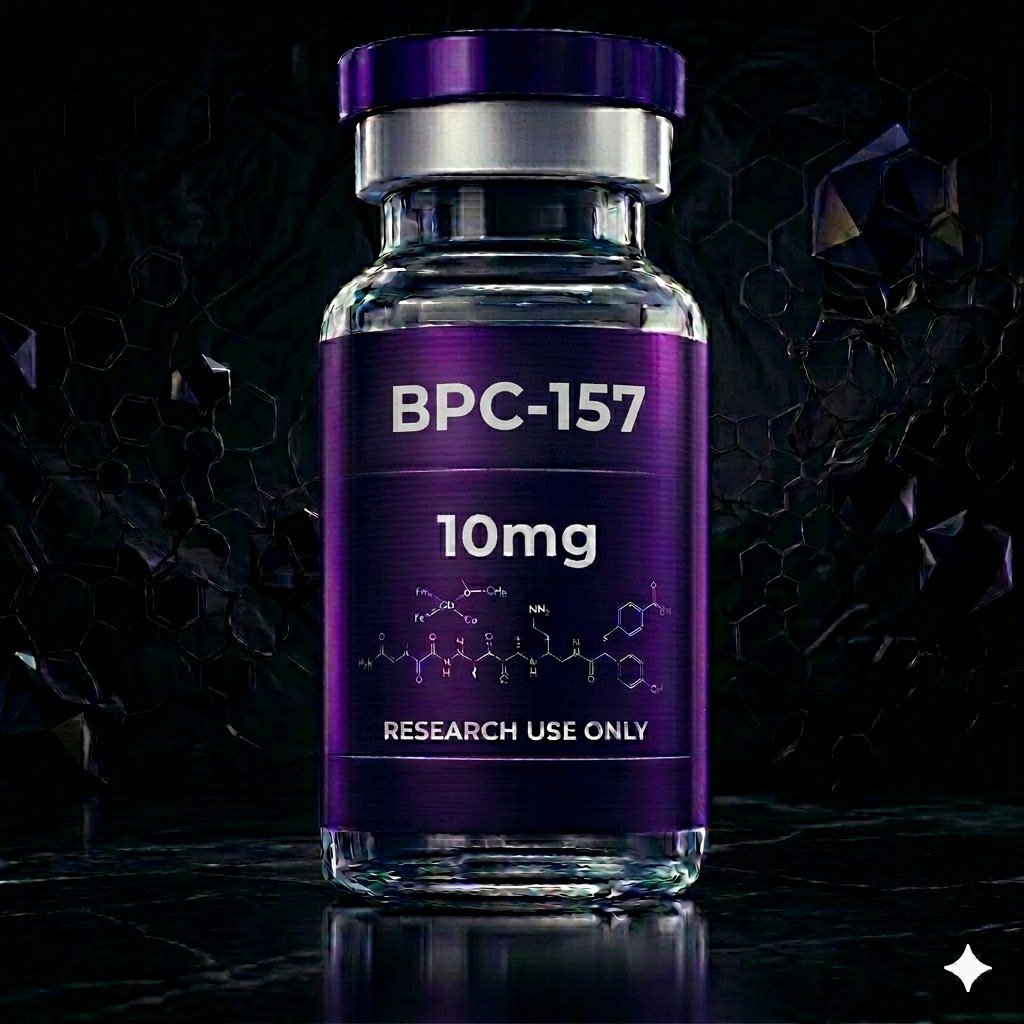


Description
BPC-157 (Body Protection Compound-157) is a synthetic pentadecapeptide composed of 15 amino acids. This sequence is a partial derivative of a protein naturally occurring in human gastric juice. In biochemical research, BPC-157 is categorized as a high-affinity signaling agent recognized for its influence on the body’s internal regenerative pathways.
Laboratory studies primarily focus on its role as a mediator of angiogenesis (the formation of new blood vessels). This mechanism is extensively researched for its impact on:
-
Structural Tissue Maintenance: Evaluating the regeneration of muscle fibers, tendons, and ligaments.
-
Gastrointestinal Research: Investigating the peptide’s ability to support the integrity of the gastric and intestinal lining.
-
Vascular Signaling: Observing how enhanced blood vessel formation facilitates nutrient transport to high-stress areas.
-
Inflammatory Response: Researching the peptide’s role in maintaining joint flexibility and modulating systemic inflammatory markers.
Research Applications of Impact Aminos BPC-157
Laboratory evaluations of BPC-157 typically focus on the following data points:
-
Extracellular Matrix Support: Monitoring the synthesis of proteins required for connective tissue resilience.
-
Tissue Recovery Markers: Analyzing the peptide’s influence on cellular repair mechanisms following various forms of physical or metabolic stress.
-
Cytoprotective Properties: Observing the peptide’s interaction with epithelial and mucosal cells in research models.
For researchers focusing on systemic structural recovery, BPC-157 is frequently studied in conjunction with Impact Aminos TB-500 (often referred to as the “Wolverine Blend”).
Research Applications & Technical Specifications
Impact Aminos BPC-157 is provided in a high-purity lyophilized (freeze-dried) format to ensure peak molecular stability and analytical accuracy.
Reconstitution & Laboratory Handling
-
Preparation: For laboratory evaluation, BPC-157 must be reconstituted with Bacteriostatic Water or sterile saline.
-
Administration Formats: Research protocols typically utilize subcutaneous (SubQ) administration. Researchers often evaluate the difference between localized administration near an area of interest versus systemic rotation.
-
Storage: Once reconstituted, the solution must be kept refrigerated (2°C to 8°C) to prevent the degradation of the amino acid chain.
Common Research Parameters
Standard laboratory observations for BPC-157 often utilize the following data points:
-
Standard Concentration: Evaluation typically ranges from 250 mcg to 500 mcg per 24-hour cycle.
-
Observation Focus: Studies are often structured to monitor the rate of recovery in structural tissues or the maintenance of gut-barrier integrity in research models.
-
Stability Profile: BPC-157 is highly regarded in literature for its resilience and compatibility with a wide range of other research peptides.
Research Disclaimer: All products from Impact Aminos are intended strictly for laboratory and research purposes only. They are not intended for human consumption or for the diagnosis, treatment, cure, or prevention of any medical condition or injury. All research should be conducted by qualified professionals in an appropriate setting.


Reviews
There are no reviews yet.